The most important Formula 1 2025 rule changes
Written by Emma Berger
Feb 1, 2022
8 min
Formula 1
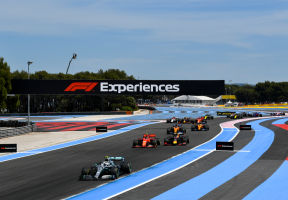
… and join in the conversation like a true F1 expert!
Formula 1 continues to evolve, and 2025 brings new regulations aimed at making the sport fairer, safer, and more exciting. From scrapping bonus points to stricter weight rules and cooling technology for drivers – these changes will significantly impact the season. In this blog, we take you through the most important F1 rule changes for 2025.
1) 5 new F1 rules of 2025 2) General F1 racing rules 3) F1 safety rules 4) Technical F1 rules 5) All about practice and qualifying 6) Formule 1 programme 2025
Let’s face it, following a race without knowing the F1 rules is tough, but don’t panic: this is your chance to become an F1 expert. The aim of new F1 rules is to make this extreme sport sustainable and fair, but also to improve the racing spectacle.
Discover the 5 most important new F1 rules below.
Since 2019, drivers who set the fastest lap of the race and finished in the top 10 were awarded an extra World Championship point. While this sometimes led to strategic surprises, in reality, the bonus point mostly benefited top teams. In 2025, the FIA has decided to remove this rule, shifting the focus back to overall race results rather than a single fast lap.
Formula 1 cars have steadily become heavier due to technological advancements and enhanced safety features. In 2025, the minimum weight has been increased again to 800 kg, up from 798 kg last season. Additionally, the minimum driver weight, including seat and gear, has been raised to 82 kg. This change ensures a more level playing field for taller and naturally heavier drivers, who previously faced disadvantages.
F1 is providing more chances for young talents by enforcing a rule that each team must run a rookie driver at least twice per car during Free Practice 1 (FP1) throughout the season. This means every team is required to give four rookie outings per year, allowing young drivers to gain valuable experience in a Formula 1 car. This is a significant step towards developing the future stars of the sport.
With races in extreme heat conditions, such as Qatar and Singapore, overheating has become a growing concern. To address this, the FIA has introduced a new rule: if temperatures exceed 30.5 degrees Celsius, teams may be required to install additional cooling systems for drivers. This change aims to reduce physical strain and improve driver safety.
For the first time in Formula 1 history, all teams unveiled their new cars together in a massive launch event at the O2 Arena in London on February 18, 2025. This replaces the traditional method where teams individually revealed their cars. The new approach enhances fan engagement and builds excitement ahead of the season opener.
Now that we have the new rules behind us, let’s move up a gear to the general F1 racing rules. Here they come!
All F1 rules are devised by the FIA, also known as the Fédération Internationale de l’Automobile. They make sure the race is carried out according to the rules and is also safe. The FIA has determined that a minimum of 305 kilometres per race must be driven. Every Grand Prix has its own circuit with a fixed distance. The number of laps per Grand Prix can therefore differ. A Grand Prix may not last longer than two hours and a practice sessions lasts about 90 minutes.
Formula 1 is, besides an individual sport, also a team sport! There are 20 drivers who drive in teams of 2. In the 2025 Formula 1 season there will be 10 teams competing. Below is a clear overview of all teams and their drivers.
|
Teams |
Drivers |
|---|---|
|
Mercedes AMG F1 |
Russel, Antonelli |
|
Red Bull Racing |
Verstappen, Lawson |
|
McLaren Racing |
Norris, Piastri |
|
Aston Martin F1 Team |
Stroll, Alonso |
|
Alpine F1 |
Gasly, Doohan |
|
Scuderia Ferrari |
Hamilton, Leclerc |
|
Racing Bulls |
Hadjar, Tsunoda |
|
Kick Sauber |
Hulkenberg, Bortoleto |
|
Haas F1 |
Ocon, Bearman |
|
Williams Racing |
Albon, Sainz |
Drag Reduction System, better known as DRS, is the system by which drivers can open their rear wing. Why is this necessary? The system is designed to facilitate overtaking. On a straight, the driver can use the system, which releases the downward pressure on the car. As you can guess, this allows the car to reach a higher top speed. When approaching a corner and the brakes are applied the wing closes automatically, this downward pressure allows the car to get through the corner better.
It is also important that DRS is only activated when there is less than 1 second between the two drivers in the race. In free practice and qualifying, drivers are allowed to use the Drag Reduction System anytime within the designated zones.
The purpose of track limits is simple: drivers are not allowed to cross the white lines with the whole car. Often you see that drivers use the kerbs (outside the white lines) but keep just a small part of their tyre on the right side of the white line. They are not doing anything wrong but using the track and the rules to their full extent. Not all circuits have white lines as track limits. In Monaco, for example, you have a wall as a track limit.
The FIA does everything in its power to ensure the safety of the drivers, stakeholders and spectators. This is an absolute top priority within this extreme sport. These F1 safety rules are important to know while following a race!
During a Grand Prix, practice and qualifying sessions, flags are used to communicate with the drivers. There are different types of flags represented by different colours, all of which have their own meaning. Below you can read more about the most common and important flags!
As mentioned earlier, the safety of everyone involved in Formula 1 is priority number 1, hence the existence of all these Formula 1 rules. Read more about the safety car and the virtual safety car below!
During Grands Prix, the safety car is used in the event of a major accident, heavy rain or in circumstances where the cars cannot be driven safely. Signs along the track will read “SC”. This means that the safety car is deployed and enters the track to slow everyone down.
Nowadays, all new Formula 1 cars have LEDs on the steering wheel that inform the drivers which flags are waved. A yellow LED means that the safety car will be deployed.
The virtual safety car is a system that indicates that the F1 drivers must drive slower during an incident or dangerous situation. In 2015, the virtual safety car was introduced to Formula 1. When two yellow flags are waved, the virtual safety car is deployed. Drivers who still drive too fast and do not obey the rules will receive a time penalty. When the virtual safety car is deployed, drivers are only allowed to go to the pit lane to change tyres.
During the Monaco Grand Prix in 2015, the very first virtual safety car was deployed, this was after Max Verstappen and Romain Grosjean collided at the end of the main straight.
The technical rules can be a bit tricky to remember. Don’t worry: we’re here to explain the technical rules of Formula 1 as simply as possible.
Fun fact: did you know that drivers have to drive on at least two different colour/type of tyres?
For example, you could drive a whole race on one set (hard, medium or soft) of tyres, but you are not allowed to, so the drivers have to make one pit stop to change tyres. The exception: the tyre rule does not apply if the track is officially declared too wet by the Clerk of the Course. In that case you can start and finish the race on Full Wets. Changing to another colour/type of tyre would be dangerous.
Regular tyres: Red: Soft Yellow: Medium White: Hard
Rain tyres: Green: Intermediates Blue: Full Wet
The engines of F1 cars are certainly not unimportant. That’s where the horsepower comes from and is where the speed is ultimately determined. The engines have many regulations, but the horsepower is unlimited.
The size of a Formula 1 car can be a maximum of 2 metres. This distance is measured from the side of the tyres, when they are in a straight position. Also, the weight of the car is an important issue. Did you know that the car is weighed with the driver present? It is therefore disadvantageous if you are, for example, large and heavy.
Currently the FIA has determined that new F1 cars must weigh a minimum of 800kg including the driver. A minimum of 82 kg is required for the driver together with the seat. So very occasionally extra weights have to be placed under the seat to reach 82 kg. The time per lap will probably be a fraction slower than in previous years because of the extra weight.
Fun fact: do you think your own car already guzzles a lot of petrol? A Formula 1 car can consume about 75 litres in 100 km.
Before the Grand Prix, drivers are allowed three free practice sessions and one qualifying session. Below you will find the explanation of the F1 rules regarding practice and qualifying.
The free practice sessions, also called FP(Free Practice), are the sessions that the teams use to practice for qualifying and the final GP race. In total you have three free practice sessions per Grand Prix. The first (FP1) and second (FP2) free practice sessions take place on Friday. These sessions are both 1.5 hours long. The third free practice (FP3) takes place before qualifying on Saturday and lasts one hour. The aim of these free practice sessions is for the drivers and teams to find the right set-up for qualifying and the GP race.
The dress rehearsals. The F1 qualifying session is the most important for the drivers before the Grand Prix. It determines the starting grid for the Grand Prix on Sunday. The driver who sets the fastest lap time gains pole position (P1). That driver gets the advantage of starting at the front of the grid during the Grand Prix. Qualifying is divided into three parts: Q1, Q2 and Q3.
After the qualification, grid penalties can be given. There are two types of grid penalties:
Behavioural infringement: the driver has broken the rules because of dangerous behaviour on the track. Technical infringement: here you can think of using too many engine parts, installing a new gearbox, etc.
For example, if you have three grid penalties and qualify in P1, then you automatically drop 3 positions. Logically, the other drivers move up a place.
For Sprint Races fans, there is good news: they will be back again in the 2025 season! For the upcoming season there will be six sprints again. These are at the Grand Prix of China, Miami, Belgium, USA, Brazil, and Qatar. Below is an overview of the upcoming season’s sprint races.
|
Race |
Date Sprint Race |
Date Grand Prix |
|---|---|---|
|
22 March 2025 |
23 March 2025 |
|
|
3 May 2025 |
4 May 2025 |
|
|
26 July 2025 |
27 July 2025 |
|
|
18 October 2025 |
19 October 2025 |
|
|
8 November 2025 |
9 November 2025 |
|
|
29 November 2025 |
30 November 2025 |
Cheers! You’re now up to date with all the F1 2022 rules. Talk to other Formula 1 connoisseurs and brag about your racing knowledge to your colleagues. Want to know everything about the 2025 racing calendar? Get inspired by our other blog about the F1 2025 schedule. Here you can learn all about the circuits and the 2025 F1 calendar.
Which race is on your calendar this year? Check out all our F1 packages and indulge yourself with luxury, convenience and comfort.
Check some other articles
Discover the complete Formula 1 calendar 2027. View every Grand Prix, race date, circuit and destination, and sign up for official Formula 1 tickets alerts.
In this guide, we'll take a look at the grandstands of the Singapore Grand Prix to make sure you’ll find the seats most fitting to your preferences.
In this guide, we take a look at the best grandstands at Monza and help you find the right place to watch the Italian Grand Prix.