
Some London derbies return every season. Then there is Millwall against West Ham: a fixture that can disappear from the calendar for years, but never from memory. In September 2026, the clubs meet again for the first time since 2012 in their 100th competitive encounter. The derby Millwall vs West Ham can be traced back to working communities on opposite sides of the River Thames and grew into one of England's best-known football feuds. Where did it begin, why is the fixture so charged and what role has its notorious hooligan image played?
In this blog:
Why Millwall against West Ham is called the Dockers Derby
Why the fixture is played so rarely
The name Dockers Derby refers to the origins of both clubs in London's docklands. Millwall was founded as Millwall Rovers in 1885 by workers from the J.T. Morton canning and food-preserving factory on the Isle of Dogs. Ten years later, Thames Ironworks FC was formed on the other side of the river. That works team eventually became West Ham United in 1900.
The clubs' earliest supporters largely worked in and around the docks, shipyards and factories. Although the teams were based close to each other, they represented different companies and neighbourhoods. Competition for work therefore spilled almost naturally onto the football pitch. The river was not a great physical distance, but it formed a clear boundary between two communities with strong identities of their own.
Millwall later moved to South London, while West Ham travelled further east. The clubs were no longer immediate neighbours, but the historical divide remained. That is why the derby still feels like a battle over roots, neighbourhood and pride, rather than simply three points.
The first competitive match between the clubs' predecessors took place in the FA Cup on 9 December 1899. Millwall Athletic beat Thames Ironworks 2-1. The teams met far more often in those early years than they do today. They played in the same regional competitions and faced each other dozens of times within a relatively short period, giving the rivalry an early and regular rhythm.
Another historic game followed on 1 September 1904. West Ham opened their new home at the Boleyn Ground with a match against Millwall. In front of 10,000 spectators, the Hammers won 3-0. It was an early example of what the fixture would become: a match in which the sporting result and local pride could not be separated.
Before the 2026 meeting, the clubs had played 99 competitive matches. Millwall had won 38, West Ham 34 and 27 had ended in a draw. Those numbers show how evenly matched the rivalry has been across its history. Despite West Ham's greater success at the highest level, Millwall still hold a narrow advantage in the head-to-head record.
The Millwall vs West Ham rivalry has several layers. Their shared working-class background brought the clubs close together, but it also made comparison more personal. Both sets of supporters saw their club as the representative of a tough, independent London community. Winning the derby meant more than winning a football match: it brought the right to claim the stronger side of the river.
Both clubs also developed a powerful underdog identity. Millwall's famous 'No one likes us, we don't care' attitude reflects the self-image of a club that pays little attention to outside opinion. West Ham built a culture of their own around the docks, the Academy of Football and the club anthem 'I'm Forever Blowing Bubbles'. The similarities between the two clubs only made their differences feel sharper.
The derby also became increasingly rare as the teams often competed in different divisions. Tension could build for years without an outlet on the pitch. Whenever a cup draw or a change of division brought them together again, the occasion immediately felt larger than an ordinary league match.
Anyone searching for Millwall vs West Ham hooligans will quickly find stories from the 1970s and 1980s. During that period, organised crowd violence affected English football far beyond these two clubs. Groups associated with Millwall and West Ham became notorious, giving the rivalry a reputation that spread well beyond London. Films such as Green Street later reinforced that image, although such productions are entertainment rather than a reliable portrayal of every supporter.
The low point in the derby's recent history came in August 2009. West Ham won a League Cup tie 3-1 after extra time, but the football was overshadowed by disorder inside and outside Upton Park, including several pitch invasions and violence around the stadium. West Ham were later handed a substantial fine for failing to prevent supporters from entering the pitch.
Those events are part of the history and should not be romanticised. It is equally important to distinguish violent groups from the large majority of supporters who follow their club passionately but peacefully. For high-profile fixtures, clubs, police and local authorities use extensive safety measures. For most visitors, the derby's intensity lies in the noise, tension and identity, not in violence.
Not every chapter of this rivalry is defined by incidents. Its sporting moments explain why the result matters so much. In April 1903, Millwall recorded a historic 7-1 away victory over West Ham. A century later, in March 2004, the Lions won 4-1 at The Den. That match remains one of Millwall supporters' most memorable victories over their rival.
The final meeting before the long break was played on 4 February 2012. West Ham were reduced to ten men early in the match, yet still secured a 2-1 Championship victory. The clubs then disappeared from each other's fixture lists for 14 years. That long absence makes the next edition feel less like number 100 in a continuous series and more like the reopening of a story that has been waiting to continue.
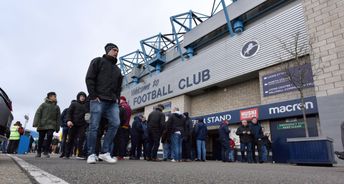
On Saturday 19 September 2026, Millwall welcome West Ham to The Den. The match is part of the Championship and will be the 100th competitive meeting between the clubs. For an entire generation of supporters, it will be the first time they have consciously experienced the Dockers Derby.
The Den is a fitting stage for its return. The stadium is compact, the stands sit close to the pitch and the noise is held between four straight-sided stands. Even on a regular matchday, the atmosphere feels direct and unpolished. Against West Ham, every challenge, tackle and decision carries extra weight.
The fixture also has genuine sporting importance. In a competition where every point matters, both teams must keep their emotions under control. The side that handles the pressure best often gains an advantage. Form and league position matter, but in a derby with this much history they do not always translate neatly onto the pitch.
A visit to Millwall offers traditional English football with very little distance between the crowd and the action. The neighbourhood, the narrow approaches to the ground and the view across the stands all underline how deeply the club is rooted in South London. That character is precisely why so many football fans have The Den on their list.
High-profile fixtures can come with additional rules covering access, transport and the movement of supporters. Always check the latest match information, arrive well ahead of kick-off and follow instructions from the club and stewards. Visitors in a home section should not wear away-team colours and must only use tickets intended for the correct area of the stadium.
After 14 years without a meeting, one of London's oldest football stories is returning. At The Den, shared working-class roots, two powerful club identities and more than a century of rivalry will come together across 90 tense minutes. For an entire generation of supporters, this is the first chance to experience the Dockers Derby for themselves: a rare match that you do not simply watch, but truly feel from the stands.
Check some other articles
Why you should visit the Premier League this season! Our Travel Tips for Premier League Season 2021 - 2022.
Whether it is your first Arsenal match or a bucket-list trip to the Emirates Stadium, this guide shows you how to experience it like a true Gunner.
Discover the best pubs and restaurants near Wembley Stadium and how to make the most of your matchday or event experience.